

Is it good idea to invest in Indian Companies which are making revenues in US dollars?
Investing in Indian companies that earn revenue in U.S. Dollars (USD)—primarily in sectors like IT services, Pharmaceuticals, and specialty chemicals—is a classic strategy, but in March 2026, the landscape has become quite nuanced due to shifting trade policies and global tensions. Here is a breakdown of the current pros and cons of this approach:
The "USD Tailwinds" (The Pros)
1. Currency Hedge: As of early 2026, the Indian Rupee (INR) has experienced a period of depreciation against the USD. For companies that earn in dollars but spend in rupees (salaries, local operations), this translates to an automatic "optical" boost in profit margins when those dollars are converted back.
2. Dominant Market Position: Large Indian IT firms are no longer just "outsourcing" hubs; they are now critical partners for Global Capability Centers (GCCs) and AI transformation. With the global IT industry in India projected to hit $350 billion by the end of 2026, these companies are deeply integrated into the US tech ecosystem.
3. Pharma Resilience: Indian pharma continues to see steady demand, particularly as the industry pivots toward complex generics and specialty products. Despite pricing pressures in the US, the sector is maintaining healthy operating margins of around 24–25%.
The 2026 Risk Factors (The Cons)
1. The "Tariffed World" Reality: A significant development in 2026 is the rise of global trade barriers. Effective tariffs on certain Indian exports to the US have reached as high as 35% in some categories. While pharmaceuticals have largely been exempt so far, the threat of future inclusion remains a major "monitorable" for investors.
2. Geopolitical Volatility: Current conflicts (such as the US-Israel-Iran tensions) have caused spikes in energy and freight costs. For export-heavy companies, these rising logistics costs can eat into the margin benefits gained from a weaker rupee.
3. US Economic Slowdown: If the US Federal Reserve maintains higher interest rates to combat inflation, it could cool down corporate spending in the US, directly impacting the order books of Indian IT service providers.
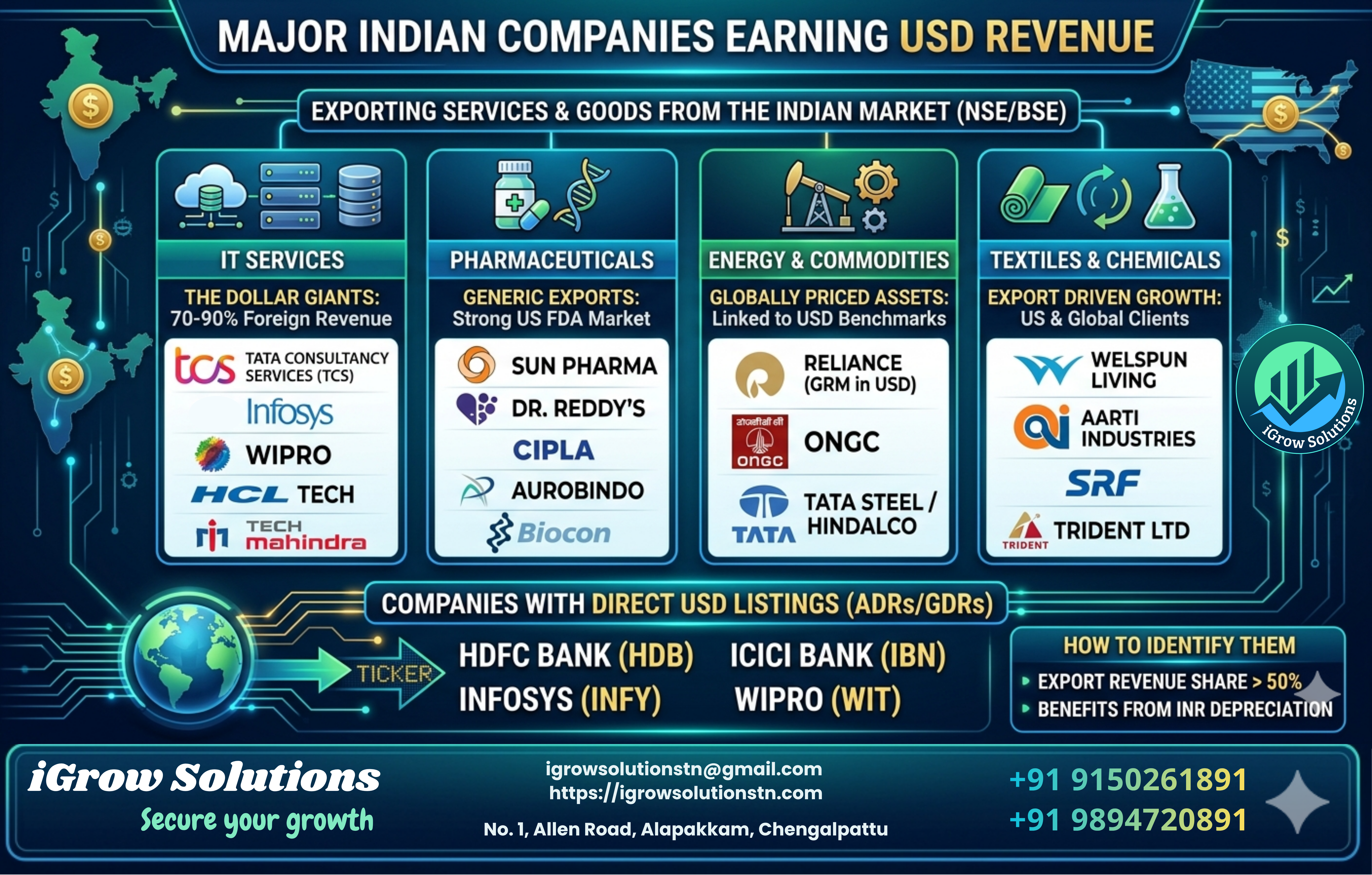
In the Indian stock market (NSE and BSE), companies are required to report their financial statements in Indian Rupees (INR). However, because India is a global export hub, a massive portion of the market earns the majority of its revenue in US Dollars (USD). These companies are primarily found in sectors where services or goods are sold to global clients (primarily in the US and Europe).
1. The IT Services Sector (The "Dollar Giants")
This is the most significant group. Most large-cap Indian IT firms earn 70% to 90% of their revenue in foreign currency, primarily USD.
1. Tata Consultancy Services (TCS): ~50% of revenue from North America alone.

2. Infosys: High exposure to US financial and retail sectors.

3. Wipro: Significant presence in US healthcare and energy markets.

4. HCL Technologies: Known for large infrastructure and engineering deals in USD.

5. Tech Mahindra: Heavily exposed to global telecom and US enterprise clients.

6. LTIMindtree: Strong focus on US high-tech and banking sectors.
2. The Pharmaceutical Sector (Generic Exports)
India is the "Pharmacy of the World," and these companies make a substantial part of their profit from the US FDA-approved generic market.
1. Sun Pharmaceutical: The largest Indian pharma company with massive US sales.

2. Dr. Reddy’s Laboratories: Listed on the NYSE as well; earns heavily from North American generics.

3. Cipla: Strong export portfolio in respiratory and HIV treatments.

4. Biocon: Major player in biosimilars for the US and European markets.

5. Aurobindo Pharma: One of the largest exporters of generic drugs to the US by volume.
3. Energy & Commodities
These companies deal in globally priced assets (Oil, Gas, Metals). Even when selling locally, their pricing is often benchmarked against USD "Import Parity" prices.
1. Reliance Industries (RIL): As a global refiner, its "Gross Refining Margins" (GRM) are earned and calculated in USD.

2. Oil & Natural Gas Corp (ONGC): Domestic oil and gas prices are linked to global USD benchmarks.

3. Tata Steel / Hindalco: Significant international subsidiaries (like Novelis) that earn entirely in foreign currency.
4. Textiles and Specialty Chemicals
1. Welspun Living: A leading home textile exporter to major US retailers like Walmart and Target.

2. Trident Ltd: High export share in towels and linens.

3. SRF / Aarti Industries: Specialty chemicals used by global pharma and agrochemical majors, priced in USD.
These are some leading companies in each category. However, do read each companies annual report and do valuation before deciding to invest in these companies.
0 Comments